How To Write Simple Blog Posts (Even If You’re a Total Beginner)
When I first tried to learn how to write simple blog posts, I overcomplicated everything. I thought blog posts needed to sound poetic, profound, or like I had swallowed a thesaurus. Meanwhile, the posts that actually performed well were the ones written like I was explaining something to a friend while wearing sweatpants.

If you’ve ever stared at a blank page thinking, “I have no idea what I’m doing,” congratulations — you’re already halfway to writing a great blog post. Simple blog posts aren’t about being fancy. They’re about being clear, helpful, and human.
Let’s walk through exactly how to write simple blog posts that people actually want to read — without overthinking, overediting, or sacrificing your sanity.
If you’re learning how to write blog posts because you want to start freelance writing, you might also like my guide on How To Start Freelance Writing With No Experience — it breaks down the entire beginner roadmap.
Why Writing Simple Blog Posts Is Easier Than You Think
The internet is full of content, but most of it is confusing, overly long, or written like the author was trying to impress their high school English teacher. Simple blog posts stand out because they’re readable.
Simple blog posts are:
- easy to skim
- easy to understand
- easy to write
- easy to finish
And finishing is the part most beginners struggle with.
You don’t need:
- a degree
- a huge vocabulary
- a perfect outline
- a dramatic writing voice
You just need to explain something clearly.
If you can text a friend instructions on how to make coffee, you can write a blog post. In fact, you could also earn money writing short content.
What Simple Blog Posts Really Are (And What They’re Not)
Before I learned how to write simple blog posts, I thought they needed to be deep, emotional masterpieces. I imagined myself typing life‑changing wisdom while sipping a latte in a café.
Reality: I write 90% of my blog posts while eating snacks I said I wouldn’t eat.
Simple blog posts ARE:
- helpful
- clear
- structured
- easy to read
- beginner‑friendly
Simple blog posts are NOT:
- academic essays
- complicated
- filled with jargon
- written to impress
- 10,000‑word novels
If you can explain something out loud without confusing someone, you can write a simple blog post.
How To Write Simple Blog Posts (The Beginner Roadmap)
This is the guide I wish someone had handed me when I started. Instead, I learned by writing messy drafts, deleting them, rewriting them, and then deleting them again. You don’t need to do that.
Here’s the simple, realistic path that actually works.
Choose a Simple Topic You Can Explain Easily
A simple blog post starts with a simple topic.
You don’t need to write about quantum physics or cryptocurrency. You can write about everyday things people search for constantly.

Beginner‑friendly blog post topics include:
- how‑to guides
- list posts
- beginner tutorials
- simple tips
- product comparisons
- routines
- checklists
- reviews
Example simple topics:
If you like productivity:
- “How To Plan Your Day in 10 Minutes”
- “5 Simple Morning Habits That Actually Work”
If you like home organization:
- “How To Declutter Your Kitchen Fast”
- “Beginner’s Guide to Organizing Your Closet”
If you like travel:
- “How To Pack Light for a Weekend Trip”
- “5 Things I Wish I Knew Before My First Solo Trip”
Image suggestion:
Insert a simple Canva graphic showing “Simple Blog Post Topic Ideas.”
Pick something you can explain without Googling every sentence.
Create a Quick, Beginner‑Friendly Outline
Simple blog posts follow simple structures.
Here’s the easiest outline in the world:
- Introduction
- What the topic is
- Why it matters
- Step‑by‑step guide
- Examples
- Tips or mistakes to avoid
- Conclusion
That’s it.
You don’t need a 47‑point outline. You just need a roadmap so you don’t wander into chaos.
Image suggestion:
Screenshot of a basic outline in Google Docs.
Write a Clear, Friendly Introduction
Your intro should:
- be short
- be relatable
- explain what the post is about
- reassure the reader
- set the tone
Example:
“Writing simple blog posts doesn’t require talent, a fancy vocabulary, or a dramatic writing voice. It just requires clarity — and a willingness to write even when your brain says, ‘No thoughts, only snacks.’”
Keep it human. Keep it simple.
Write the Main Content Using Short Paragraphs and Headings
This is where beginners overthink.

Simple blog posts use:
- short paragraphs
- short sentences
- clear headings
- bullet points
- examples
- simple language
Instead of:
“Productivity is a multifaceted concept requiring strategic implementation.”
Write:
“Being productive just means getting things done without losing your mind.”
Your reader will love you for it.
Image suggestion:
Before/after example of a complicated sentence rewritten simply.
Add Examples to Make Your Post Instantly Better
Examples make your writing feel real.
If you’re writing about morning routines, give an example routine.
If you’re writing about decluttering, show a before/after scenario.
If you’re writing about productivity, show a sample schedule.
Examples turn “advice” into “help.”
Add 1–3 Images to Break Up the Text
Images help with:
- readability
- engagement
- scroll depth
- SEO
- Google Discover
You don’t need fancy photos.
Use:
- screenshots
- Canva graphics
- simple icons
- charts
- step‑by‑step visuals
Image suggestion:
Insert a simple “Step 1 → Step 2 → Step 3” graphic.
Edit for Clarity, Not Perfection
Editing doesn’t mean rewriting your entire post.
It means making it clearer.
Check for:
- long sentences
- confusing explanations
- missing steps
- giant paragraphs
- repeated ideas
Ask yourself:
“Would I say this out loud?”
If not, rewrite it.
Use Hemingway Editor to simplify your writing and make posts easier to read.
Use Simple SEO to Help Your Blog Post Get Found
If you want people to actually find your content, you need a tiny bit of SEO — especially when you’re learning how to write simple blog posts that rank. The good news? Beginner‑level SEO is basically just labeling your content so Google knows what it’s about. You don’t need to be an expert to make your posts discoverable.
Here’s the simple version:
Use your main keyword naturally
If your post is about how to write simple blog posts, use that phrase a few times in:
- the title
- the first paragraph
- one heading
- the conclusion
Don’t force it. Don’t stuff it. Just sprinkle it like seasoning.
Use clear headings
Google reads your headings to understand your structure.
If your headings make sense, Google is happy — and your simple blog posts become easier to rank.
Use short paragraphs
Short paragraphs = better readability = better SEO.
This is especially important when you’re learning how to write simple blog posts that keep readers engaged.
Add internal links
Link to related posts on your site.
This helps Google understand your topic clusters and boosts indexing.
A perfect internal link for this post is your guide on the Best Sites to Find Beginner Writing Gigs, since many readers want to turn simple blog posts into paid writing.
Add alt text to images
Just describe what the image is.
Example: “simple blog post outline example.”
Use a clean URL
Short and clear works best:
/how-to-write-simple-blog-posts/
That’s it. That’s beginner SEO.
You’re now officially doing more SEO than most bloggers.
The Fastest Way To Get Better at Writing Simple Blog Posts
You don’t improve by thinking about writing.
You improve by writing.

Here’s what helped me:
Read simple content
Not to copy — to understand flow.
Write daily
Even 10 minutes counts.
Use simple language
If you wouldn’t say it, don’t write it.
Study headlines
They matter more than you think.
Practice rewriting
Take a complicated paragraph and simplify it.
Follow a routine
Day 1: Write 200 words
Day 2: Write a list post
Day 3: Rewrite something old
Day 4: Write a how‑to
Day 5: Edit a post
Day 6: Add images
Day 7: Publish something
Small steps add up fast.
How To Write Simple Blog Posts Faster (Without Rushing)
Once you understand how to write simple blog posts, the next step is learning how to write them faster without sacrificing clarity. Simple blog posts are actually the easiest type of content to speed‑write because they follow predictable patterns and don’t require complicated research.
Here’s how to write simple blog posts quickly while still keeping them helpful and readable:
Use a timer
Set a 10‑minute timer for each section.
Deadlines force your brain to focus and stop overthinking.
Write first, edit later
Don’t pause to fix every sentence.
Get the ideas out. Clean them up afterward.
This is one of the biggest secrets behind learning how to write simple blog posts efficiently.
Use templates
Most simple blog posts follow the same structure:
- intro
- what it is
- why it matters
- steps
- examples
- tips
- conclusion
Once you’ve written a few, you’ll start writing them on autopilot.
Reuse your own ideas
If you explained something well in a previous post, reuse the concept.
Consistency is good — repetition builds your writing voice.
Use voice‑to‑text
Talking is often faster than typing.
Speak your ideas, then edit them into clean paragraphs.
Don’t aim for perfect
Aim for “clear and helpful.”
Perfection is where blog posts go to die.
How To Write Simple Blog Posts That Actually Get Read
Let’s talk about the part everyone cares about:
getting people to read your posts.
Here’s what works:
Use clear, simple titles
Examples:
- “How To Declutter Your Kitchen Fast”
- “Beginner’s Guide to Time Blocking”
- “5 Simple Ways To Save Money This Month”
Use headings that make sense
Your reader should be able to skim your post in 10 seconds.
Use short paragraphs
No walls of text.
Use examples
They make your writing feel real.
Use images
They break up the content.
Use internal links
Link to related posts on your site.
Simple Blog Post Templates You Can Copy
One of the easiest ways to learn how to write simple blog posts is to use templates. Templates give you structure, reduce overwhelm, and help you write faster because you’re not starting from a blank page. Once you understand these formats, you’ll be able to create simple blog posts on almost any topic.
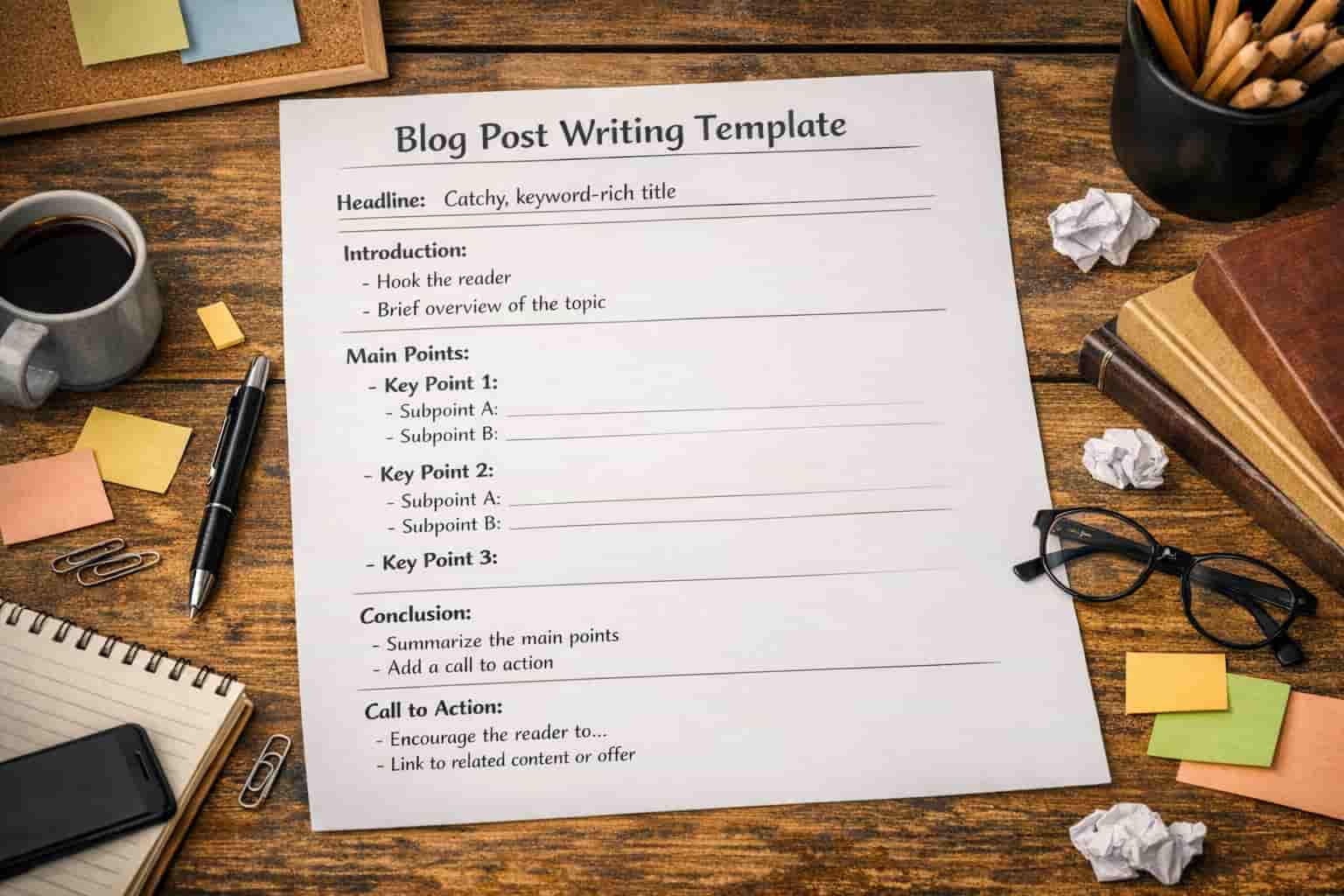
Here are three beginner‑friendly templates you can use today.
Template 1 — The Simple How‑To Post
Title: How To [Do Something] in [Timeframe]
Intro:
Relatable moment + what the reader will learn + reassurance that the process is simple.
H2: What This Is
Explain the topic in the simplest way possible.
H2: Why It Matters
Give 2–3 reasons this topic is helpful or important.
H2: Step‑by‑Step Guide
Step 1
Step 2
Step 3
(Keep each step short and clear.)
H2: Examples
Give 1–3 real‑life examples to make the steps feel doable.
H2: Tips or Mistakes to Avoid
Short bullet list of quick wins.
Conclusion:
Encouragement + next step.
This is the easiest format when you’re learning how to write simple blog posts because it follows a predictable flow.
Template 2 — The Simple List Post
Title: X Simple Ways To [Achieve Something]
Intro:
Short, friendly, and relatable. Explain what the list will help with.
H2: Tip #1
Explanation + example.
H2: Tip #2
Explanation + example.
H2: Tip #3
Explanation + example.
(Repeat as needed.)
Conclusion:
Encourage the reader to try one tip today.
List posts are perfect for beginners because they’re naturally skimmable and easy to write.
Template 3 — The Beginner Guide Post
Title: Beginner’s Guide to [Topic]
Intro:
Explain why the topic is simple and beginner‑friendly.
H2: What It Is
Clear definition in plain language.
H2: Why It Matters
Short list of benefits.
H2: How To Do It
Step‑by‑step instructions.
H2: Examples
Show how it works in real life.
H2: Common Mistakes
Short list of things to avoid.
Conclusion:
Reassurance + next step.
This template is perfect for educational content and works beautifully for SEO.
Common Mistakes Beginners Make (And How To Avoid Them)
❌ Writing paragraphs that are too long
✔ Break them up.
❌ Trying to sound “smart”
✔ Sound human instead.
❌ Overexplaining everything
✔ Keep it simple.
❌ Writing without an outline
✔ Use a basic structure.
❌ Forgetting images
✔ Add 2–4 visuals.
❌ Not editing
✔ Read your post out loud.
Frequently Asked Questions About Writing Simple Blog Posts
Do simple blog posts rank on Google?
Yes — often faster than complicated ones.
How long should a simple blog post be?
1500–2500 words performs best on most sites.
Do I need images?
Yes. They help with readability and indexing.
Do I need SEO?
Just the basics: headings, keywords, clarity.
Do I need a niche?
It helps, but you can start without one.
Final Thoughts: You Can Write Simple Blog Posts Today
Writing simple blog posts isn’t about being perfect.
It’s about being clear, helpful, and human.
If you can explain something to a friend, you can write a blog post.
Start with:
- a simple topic
- a simple outline
- a simple structure
- simple language
And you’ll be shocked at how quickly your writing improves.
If you want to turn simple blog posts into paid writing, check out my guide on How To Write Simple Articles That Get Paid …it walks you through the entire beginner roadmap.
Helpful Resources
• PlainLanguage.gov – A straightforward guide to writing in plain, clear language that anyone can understand.