Daily Transcription Jobs: What This Platform Actually Does (and Who It’s For)
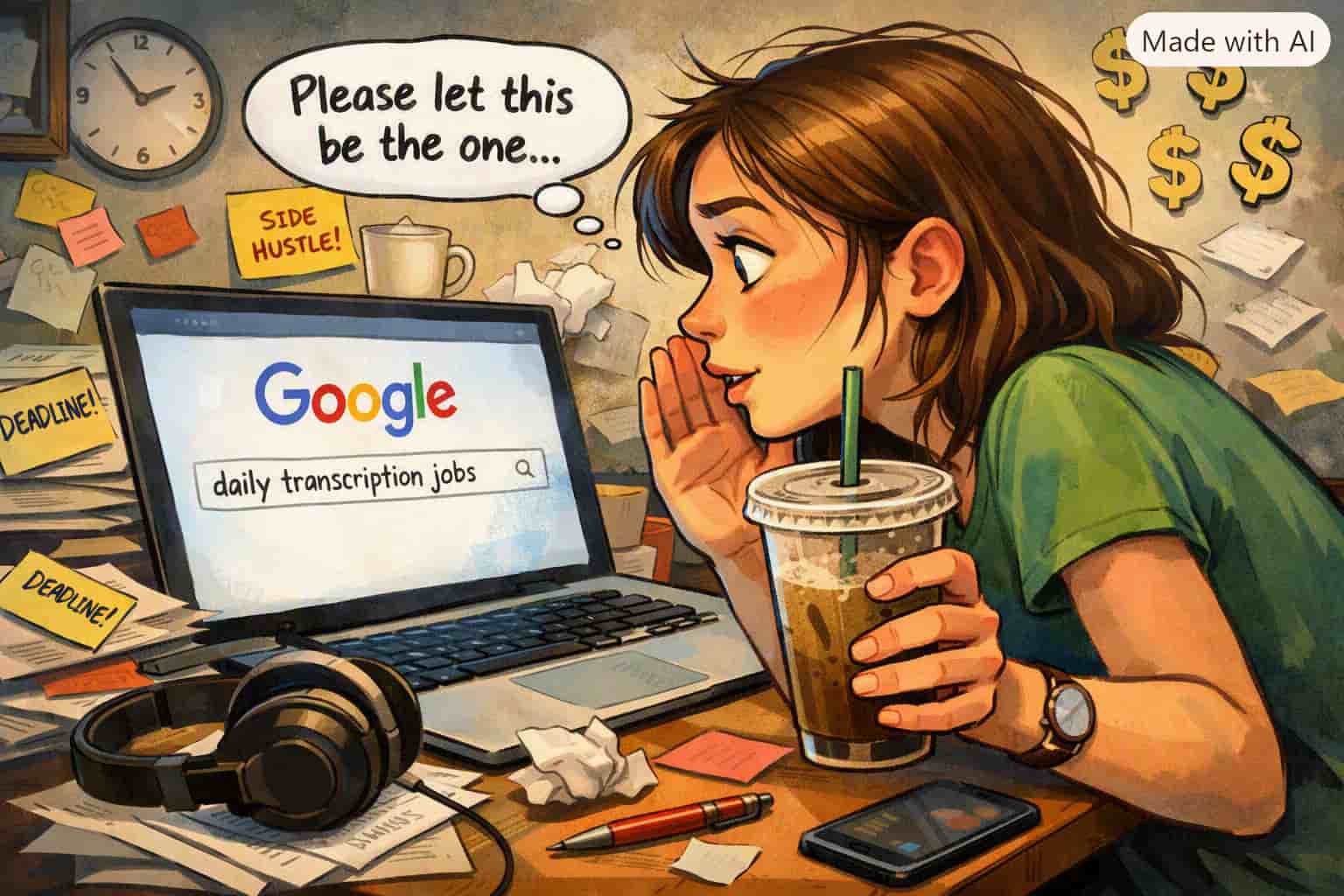
If you’ve ever typed daily transcription jobs into Google while clutching a half‑finished iced coffee and whispering “please let this be the one,” welcome to the club. Daily Transcription is one of those platforms that sounds simple on paper: listen, type, submit, get paid. But as someone who has tried more online gigs than you can imagine, I can tell you Daily Transcription Jobs are a very specific flavor of side hustle — and not everyone knows what they’re signing up for.
Daily Transcription is a U.S.-based transcription company that hires freelancers to work on entertainment transcripts, academic interviews, corporate content, and occasionally legal or educational material.
It’s not as massive as Rev or GoTranscript , but it has a reputation for being structured, consistent, and surprisingly friendly to beginners who are willing to learn.
If you’re looking for transcription platforms that offer work globally, in your country, you can try GoTranscript or TranscribeMe.
Before you dive in headfirst, let’s break down what Daily Transcription Jobs actually involve, who thrives here, and whether this platform deserves a spot in your work‑from‑home lineup.
Daily Transcription Jobs: Pay, Workflow, and What You Can Expect Day‑to‑Day
Let’s talk about the part everyone secretly wants first: money. If you’re researching daily transcription jobs, you’re probably hoping this gig will help fund your coffee habit, your grocery bill, or your “I deserve a treat” budget. Daily Transcription pays per audio minute, which means your earnings depend on how fast you type, how clean the audio is, and how well you follow instructions.
Here’s a simple breakdown:
| Category | What You Get | Why It Matters |
|---|---|---|
| Pay Structure | Per audio minute | You earn based on completed work, not hours spent. |
| Rates | Vary by project type | Entertainment often pays more than general transcription. |
| Payout Schedule | Weekly | Perfect for side hustlers who need consistent cash flow. |
| Difficulty | Moderate | Not too hard, not too easy — the Goldilocks zone. |
Daily Transcription Jobs are ideal for people who:
- Type quickly
- Have strong attention to detail
- Don’t mind listening to people talk for long stretches
- Can follow formatting rules without rebelling
- Want flexible work without committing to full‑time hours
If you’re someone who thrives on structure, Daily Transcription Jobs might feel like a warm hug. If you’re someone who hates rules, you may feel personally attacked by the style guide.
Why Daily Transcription Jobs Are Different From Other Platforms
Daily Transcription isn’t trying to be the Walmart of transcription platforms. It’s more like a boutique store — smaller, more curated, and a little more selective. That’s actually a good thing.
Here’s what sets it apart:
1. More Entertainment Work
Daily Transcription Jobs often include TV, film, and media content. If you’ve ever wanted to transcribe someone arguing dramatically on camera, this is your moment. This video producers guide explains things more clearly.
2. Higher Accuracy Expectations
They care about quality. Not “perfect,” but definitely “don’t wing it and hope for the best.”
3. Smaller Worker Pool
This means:
- Less competition
- More consistent work
- A tighter community
4. Clear Style Guidelines
Some platforms give you a style guide that feels like it was written during a caffeine shortage. Daily Transcription’s guide is surprisingly readable.
5. Weekly Pay
No waiting two weeks. No “processing delays.” Just a nice little deposit that says, “Good job, you survived another week.”
What You Actually Do in Daily Transcription Jobs (Step‑by‑Step)
If you’re wondering what the workflow looks like, here’s the simple version:
- Log in
- Choose a file
- Listen to the audio
- Transcribe what you hear
- Follow the style guide
- Proofread your work
- Submit and wait for approval
- Get paid weekly
It’s not complicated — but it does require patience, focus, and the ability to handle audio that occasionally sounds like it was recorded inside a blender.
How to Apply to Daily Transcription (Simple Step‑by‑Step)
Applying to Daily Transcription is surprisingly straightforward — no scavenger hunts, no mystery buttons, no “click here to click there” nonsense. If you’re curious about daily transcription jobs and want to get started quickly, here’s the clean, beginner‑friendly path.
1. Go to the Careers Page
Daily Transcription keeps things organized. Head to their Careers section, where they list openings for:
- Transcribers
- Captioners
- Bilingual transcribers
- Specialty roles (depending on demand)
You’ll see clear descriptions, requirements, and the “Apply” button right where it should be — not hidden behind a maze of menus.
2. Choose Your Role
Pick the position that matches your skills. If you’re new, the standard transcription role is the easiest entry point.
3. Fill Out the Application Form
You’ll provide:
- Your name
- Contact info
- Experience (if any)
- Availability
- A short explanation of why you’re applying
No resume uploads, no dramatic essays, no “tell us your greatest weakness” corporate nonsense.
4. Read the Style Guide
Before you take the test, download the shortened Style Guide. This is crucial — Daily Transcription wants to know you can follow instructions, and the test pulls directly from this guide.
You can review specific formatting requirements and samples through resources like the Daily Transcripts Style Guide or training frameworks such as the Daily Transcription Academy.
5. Take the Skill Assessment Test
This is the gatekeeper. Pass it, and you’re in. Fail it, and you can try again later.
6. Wait for Approval
If you pass, Daily Transcription will email you with next steps, onboarding details, and access to the work portal.
7. Start Working
Once approved, you can begin choosing files, transcribing, and earning weekly pay.
It’s one of the simplest application processes in the transcription world — clean, structured, and beginner‑friendly.
Daily Transcription Skill Assessment Test: What to Expect Before You Get In
Before you can start daily transcription jobs, you have to pass the Daily Transcription Skill Assessment Test — a short but intentional quiz designed to make sure you can follow instructions and understand the basics of transcription formatting.
This test isn’t about typing speed. It’s about accuracy, comprehension, and rule‑following.
What the Test Covers
Daily Transcription states that the first eight questions come directly from their shortened Style Guide. That means they’re checking:
- Grammar and punctuation
- Formatting rules
- Speaker labeling
- Number usage
- Dashes, ellipses, and transcription symbols
It’s not meant to trick you — it’s meant to confirm you can follow the same rules their clients expect.
What They’re Really Testing
The Skill Assessment Test measures three core abilities:
- English mastery Clean grammar, correct punctuation, and readable sentences.
- Attention to detail If the guide says “use double dashes,” they expect double dashes — not vibes, not guesses.
- Ability to follow instructions Daily Transcription Jobs rely heavily on consistency, so they need workers who can apply rules correctly.
Why This Test Matters
Daily Transcription works with entertainment, academic, and corporate clients who expect transcripts to look a certain way every time. The Skill Assessment Test ensures:
- You understand the style guide
- You can follow formatting rules
- You’re ready for real work without constant corrections
Passing the test shows you’re reliable, detail‑oriented, and ready to handle actual files.
How to Prepare (Without Stressing Out)
You don’t need a course or a mentor. Just:
- Read the shortened Style Guide
- Pay attention to punctuation rules
- Review speaker labels
- Understand how they want numbers formatted
- Take your time on each question
If you can follow instructions, you’ll pass. If you skim the guide, you’ll feel it immediately.
My Honest Take
The Daily Transcription Skill Assessment Test is one of the fairest entry tests in the transcription world. It’s short, clear, and directly tied to the work you’ll be doing. No trick questions, no obscure grammar traps, no “gotcha” moments.
It simply checks whether you can follow the rules — which is exactly what daily transcription jobs require once you’re inside.
Who Daily Transcription Jobs Are Best For (and Who Should Avoid Them)
Daily Transcription Jobs are perfect for:
- Stay‑at‑home parents
- Students
- Side hustlers
- People who enjoy quiet, focused work
- Anyone who likes flexible hours
Daily Transcription Jobs are not ideal for:
- People who hate listening to long conversations
- Anyone who struggles with grammar
- Folks who want instant high earnings
- People who get bored easily
- Anyone who refuses to read instructions (you know who you are)
My Honest Take on Daily Transcription Jobs
Here’s the truth: Daily Transcription Jobs are not glamorous. You won’t become rich. You won’t become famous. You won’t suddenly develop superhuman typing powers.
But you will get:
- Consistent work
- Weekly pay
- A platform that treats workers decently
- A chance to build transcription skills
- A flexible schedule that fits real life
And honestly? That’s more than most side hustles offer.
If you’re looking for a reliable transcription platform that doesn’t feel like chaos wrapped in confusion, Daily Transcription Jobs are worth trying. They’re structured, steady, and surprisingly beginner‑friendly — as long as you’re willing to learn, listen, and occasionally laugh at the audio quality.
Daily Transcription Jobs: Training, Skill‑Building, and How to Actually Get Better
If Part One was all about what Daily Transcription does, Part Two is about how you grow inside the platform. Because here’s the truth: most people who search for daily transcription jobs aren’t just looking for a gig — they’re looking for a skill set that can grow into something bigger. And Daily Transcription is one of the few beginner‑friendly transcription platforms where you can actually improve over time instead of feeling stuck in transcription purgatory.
Let’s talk about the part nobody explains: how to get better, how to level up, and how to turn daily transcription jobs into something that feels like progress instead of chaos.
The Skill Curve: How Daily Transcription Jobs Make You Improve Without Realizing It
Daily Transcription has a sneaky way of training you. You don’t get a formal course, a fancy onboarding, or a “Welcome to Transcription University” badge. Instead, you learn by doing — and the platform is structured in a way that naturally builds your skills.
Here’s how the skill curve works:
1. You Start Slow (Everyone Does)
Your first few files will feel like you’re trying to decode ancient hieroglyphics. You’ll pause. You’ll rewind. You’ll question your life choices.
This is normal.
2. Your Ear Gets Better
After a few days of daily transcription jobs, you start hearing things you didn’t hear before:
- Soft background words
- Half‑mumbled phrases
- Accents you once feared
Your brain becomes a tiny audio detective.
3. Your Speed Increases
Not typing speed — processing speed. You start predicting sentence structure, recognizing filler words, and catching patterns.
4. You Become a Formatting Ninja
Daily Transcription has clear formatting rules, and once you internalize them, your workflow becomes smooth instead of clunky.
5. You Build Real Confidence
Suddenly you’re not scared of difficult files. You’re annoyed by them — which is a sign of growth.
This skill curve is why daily transcription jobs are valuable even if you don’t plan to transcribe forever. You’re building:
- Focus
- Accuracy
- Listening skills
- Professional discipline
- Remote‑work habits
These skills transfer beautifully into proofreading, editing, captioning, and even virtual assistant work.
How to Get Faster Without Losing Accuracy (The Golden Rule of Daily Transcription Jobs)
Speed matters — but accuracy matters more. Daily Transcription doesn’t want fast work; they want correct work.
Here’s how to increase speed without sacrificing quality:
Use Smart Pausing
Don’t pause every two seconds. Let the speaker finish a thought, then pause and type.
Stop Overthinking
If you’re unsure whether someone said “yeah” or “yep,” choose the closest match and move on. Perfectionism kills productivity.
Use Good Headphones
This is not optional. Bad headphones turn daily transcription jobs into torture.
Don’t Fight the Audio
If the audio is terrible, slow it down. If the speaker is fast, speed it up. If the background noise is loud, take breaks.
Proofread Once — Not Ten Times
One clean pass is enough. If you proofread obsessively, you’ll never finish.
The Hidden Benefits of Daily Transcription Jobs (Nobody Talks About These)
Daily Transcription Jobs come with a few perks that don’t show up on the website:
1. You Learn Industry Language
Entertainment transcripts teach you:
- Script terminology
- Production vocabulary
- Interview structure
This is gold if you ever want to work in media.
2. You Build Remote‑Work Discipline
You learn:
- Time management
- Self‑motivation
- Task prioritization
These are essential for any online career.
3. You Get Used to Feedback
Daily Transcription gives clear corrections. This helps you improve instead of guessing.
4. You Build a Portfolio Without Realizing It
Every file you complete is proof of your skill. You can use this experience to apply to:
- Captioning jobs
- Editing jobs
- Higher‑pay transcription companies
5. You Learn to Handle Chaos Calmly
Some audio files sound like they were recorded inside a blender. If you can handle that, you can handle anything.
How Daily Transcription Jobs Compare to Other Skill‑Building Gigs
Here’s a quick comparison chart showing how daily transcription jobs stack up against other beginner‑friendly online gigs:
| Gig Type | Skill Growth | Difficulty | Flexibility | Stress Level |
|---|---|---|---|---|
| Daily Transcription Jobs | High | Moderate | High | Medium |
| Data Entry | Low | Easy | High | Low |
| Captioning | High | Moderate | Medium | Medium |
| Microtasks | Very Low | Easy | High | Low |
| Virtual Assistant | High | Hard | Medium | High |
Daily Transcription sits in the sweet spot: high skill growth + moderate difficulty + high flexibility.
This is why so many beginners start here.
FAQ: Daily Transcription Jobs (Everything Beginners Ask)
1. Do I need experience to start?
No. Daily Transcription is beginner‑friendly. You just need good grammar, patience, and headphones that don’t betray you.
2. How often is work available?
It varies, but there is usually a steady flow — especially entertainment content.
3. How much can I earn?
It depends on your speed and the type of files you choose. Daily Transcription Jobs pay per audio minute, not per hour.
4. Is the work flexible?
Yes. You choose your own files and work whenever you want.
5. Are the audio files hard?
Some are easy. Some sound like they were recorded underwater. It’s a mixed bag.
6. Do they provide training?
Not formal training — but the feedback system teaches you quickly.
7. Can Daily Transcription lead to other jobs?
Absolutely. Many workers move on to:
- Captioning
- Editing
- Higher‑pay transcription companies
- Remote assistant roles
Daily Transcription Jobs are a great stepping stone.