Common Text Message Scams Everyone Is Getting Right Now
If your phone has ever buzzed and you thought, “Who texted me? I don’t even have friends who message this much,” congratulations — you’ve officially entered the world of common text message scams. Honestly, scammers text me more consistently than people I actually know. At this point, I’m convinced they care more about my “package delivery” than my own family does.
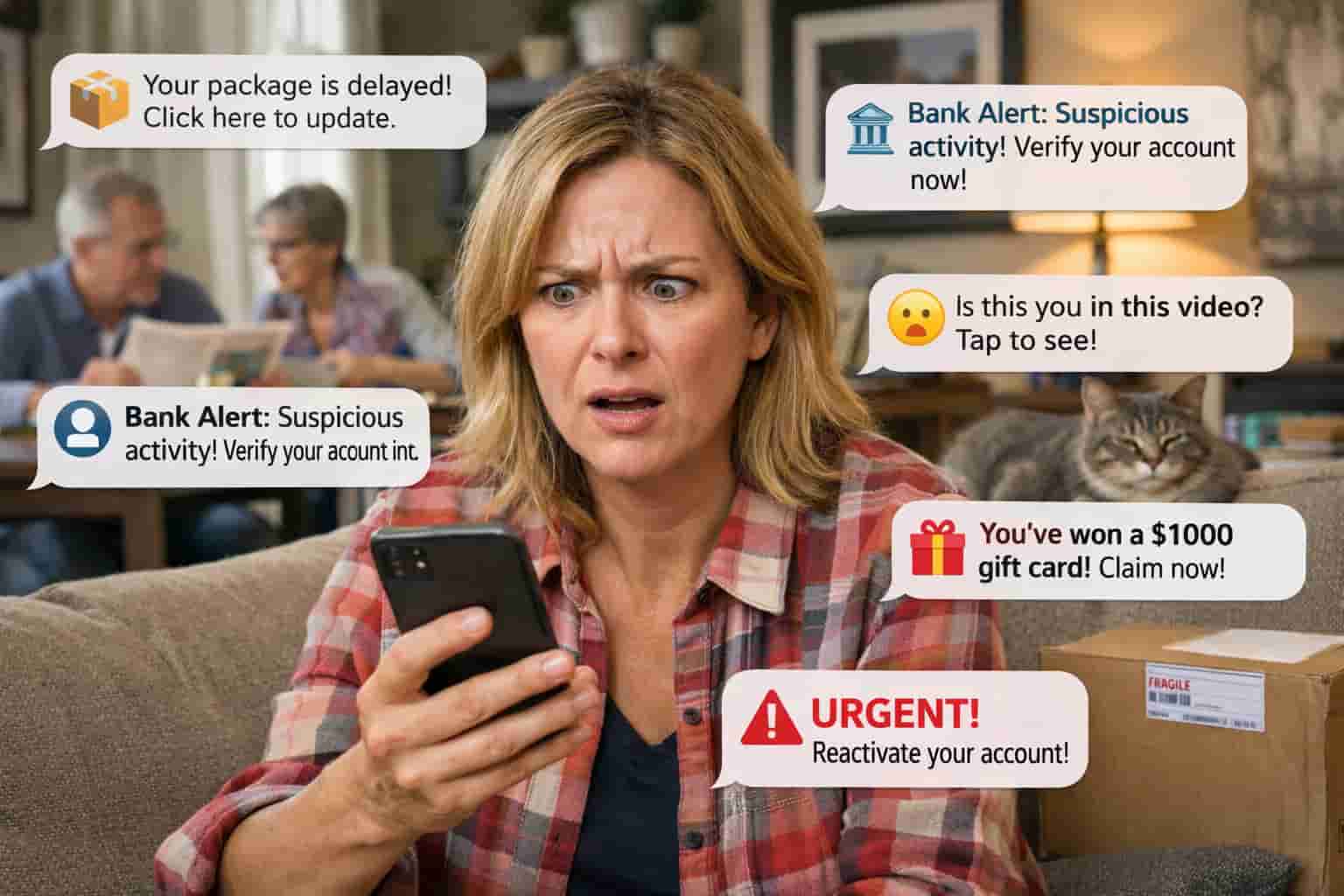
And the worst part? These scam texts look real. Too real. Like “I almost clicked because I was tired and emotionally fragile” real. After writing about Common Money Scams, I realized text scams deserved their own spotlight — because they’re multiplying faster than spam emails in the early 2000s.
So here’s the breakdown of the common text message scams hitting everyone’s phones right now, how they work, and how to avoid becoming the next “Oops, I clicked the link” cautionary tale.
Why Common Text Message Scams Are Exploding Right Now
I’ve noticed something: scammers have evolved. They’re no longer sending those old “You won a cruise!” messages. No, now they’re sending texts that look like they came straight from your bank, your delivery driver, your phone carrier, and occasionally your imaginary boss.
Here’s why common text message scams are everywhere:
- Everyone has a phone
- People respond faster to texts than emails
- Fake links look extremely real
- Delivery and banking texts feel urgent
- Scammers know we’re tired, distracted, and overwhelmed
It’s the perfect storm — and scammers are thriving in it.
Common Text Message Scams You’ll See Every Single Week
Let’s break down the common text message scams that show up like clockwork.
1. The Fake Delivery Text Scam (The “Your Package Is Stuck” Trick)
This one gets me every time because I always have a package coming. The text usually says:
“Your package is delayed. Update your delivery info here.”
And of course, the link looks legit — until you click it and suddenly your phone is asking for your credit card, your address, and your soul.
This is one of the most common text message scams because scammers know we’re addicted to online shopping. If you’ve ever bought something at 2 a.m. and forgotten about it, you’re the perfect target. This type of message can also come via your email as this is also a common email scam.
2. The Bank Verification Scam
This one is sneaky. You’ll get a text saying:
“Suspicious activity detected. Verify your account immediately.”
Your heart drops. You’re thinking, “Great, someone bought a jet ski with my debit card.”
But here’s the truth: real banks don’t send links in texts. They tell you to log into your app. Scammers want you to panic‑click like your financial life depends on it.
This is one of the most dangerous common text message scams because it steals your login info instantly.
3. The “Is This You?” Malware Scam
This one is psychological warfare. You’ll get a text with a random link and the message:
“Is this you in this video?”
Suddenly you’re questioning your entire existence.
“Did someone record me? Did I do something embarrassing? Did I sleepwalk again?”
Spoiler:
No, it’s not you.
It’s malware wearing a hoodie.
This is one of the common text message scams designed to make you click before your brain catches up.
4. The Fake Job Offer Text
You’ll get a message saying:
“We reviewed your application. You’re hired! Text YES to start.”
I didn’t apply.
I didn’t interview.
I didn’t even brush my hair today.
Job scams are a very common make money scam you want to avoid.
But apparently, I’m hired.
This is one of the common job offer scams that leads to identity theft or fake check scams. If a job hires you via text message, it’s not a job — it’s a trap.
5. The Phone Carrier Scam
This one pretends to be from:
- AT&T
- Verizon
- T‑Mobile
- Rogers
- Bell
The text usually says:
“Your bill is overdue. Pay now to avoid service interruption.”
Scammers know losing phone service is basically losing oxygen. So they use fear to get you to click.
This is one of the common text message scams that steals payment info instantly.
How to Spot Common Text Message Scams Before They Get You
After dealing with enough of these, I’ve developed a sixth sense. Here’s what I look for:
1. The Link Looks… Off
If the link looks like someone smashed their keyboard, it’s fake.
2. The Message Feels Urgent
Scammers love urgency:
- “Act now!”
- “Final notice!”
- “Your account will be closed!”
Real companies don’t yell at you through text.
3. The Grammar Is Weird
If the message reads like it was written by someone who learned English from a cereal box, it’s a scam.
4. The Number Looks Random
If the text comes from:
- A 10‑digit number
- A weird short code
- A number that looks like it was generated by a potato
…it’s probably one of the common text message scams.
5. They Ask for Personal Info
No real company asks for:
- Passwords
- Banking info
- Social Security numbers
- Credit card details
Especially not through text.
And honestly, if scammers aren’t blowing up your phone, they’re probably lurking on your Facebook feed. I break those down in my post on Common Social Media Scams.
My Personal Experience With Common Text Message Scams
Let me tell you — I’ve received some wild ones.
One time, I got a text saying:
“Your Netflix account has been suspended.”
Funny, because I don’t even have Netflix.
But for a split second, I still panicked.
Another time, I got a text saying:
“Your package cannot be delivered due to unpaid customs fees.”
I live in Canada.
I ordered socks.
Why would socks have customs fees?
These common text message scams are designed to hit you when you’re tired, distracted, or emotionally vulnerable. And honestly? They almost got me a few times.
Perfect timing, Cathy — here’s one last section to wrap up your Common Text Message Scams post with humor, clarity, and EEAT‑friendly authority. It flows naturally after your FAQ and keeps your keyword tone consistent.
The Future of Common Text Message Scams (And Why They’re Getting Smarter)
I wish I could say scammers are slowing down, but honestly, they’re evolving faster than my phone’s battery drains. The next wave of common text message scams is already here — using AI‑generated messages, fake customer service bots, and even cloned voices to sound more believable. It’s wild.
I recently got a text that said, “Hi Mary, this is your bank’s fraud department. Please confirm your last transaction.” It used my name, my city, and even the right bank logo. For a split second, I thought it was real — until I noticed the link looked like someone sneezed while typing.
That’s the scary part: these common text message scams are learning how to mimic trust. They’re not just random spam anymore; they’re personalized traps. The best defense? Stay skeptical, double‑check everything, and remember that no legitimate company will ever rush you through a text.
What to Do If You Get a Suspicious Text
Here’s what I do now:
- Don’t click anything
- Don’t reply
- Don’t call the number
- Block the sender
- Report the text to your carrier
- Delete it like it never existed
If you’re unsure, go directly to the company’s official website or app. Never trust the link in the text.
The FTC show you how to recognize and report spam text messages
The Psychology Behind Common Text Message Scams
Scammers aren’t just sending random messages. They’re using psychology:
- Fear (bank scams)
- Curiosity (“Is this you?”)
- Urgency (delivery scams)
- Reward (“You won!”)
- Authority (fake carrier or government texts)
These common text message scams work because they trigger emotions before logic.
Final Thoughts: You’re Not Dumb — These Scams Are Designed to Fool You
If you’ve ever almost fallen for one of these common text message scams, don’t feel bad. Scammers are professionals. They study human behavior. They know exactly what to say to make you click.
Just stay alert, trust your gut, and remember:
If a text feels weird, it probably is.
FAQ: Common Text Message Scams
1. What are common text message scams?
They’re fake messages sent by scammers pretending to be delivery companies, banks, or even your phone carrier. The goal? To make you click a link or share personal info. If it sounds urgent or too good to be true, it’s probably one of the common text message scams.
2. Why do scammers use text messages instead of email?
Because texts feel personal and immediate. People check their phones constantly, so scammers know they’ll get faster reactions. It’s the same reason common text message scams are growing faster than email phishing.
3. Can clicking a link in a scam text really harm my phone?
Yes — clicking can install malware or lead to fake websites that steal your data. Even one tap can expose your info. Always delete suspicious texts and report them to your carrier.
4. How can I tell if a text is fake?
Look for weird grammar, random numbers, or links that don’t match official websites. Real companies never ask for passwords or banking info by text. If you’re unsure, visit the company’s official site directly.
5. What should I do if I already replied to a scam text?
Stop responding, block the number, and report it. If you shared personal details, contact your bank and monitor your accounts.
Helpful Resources: Smart ways to save and earn money
Scammers are hiding in your text messages!